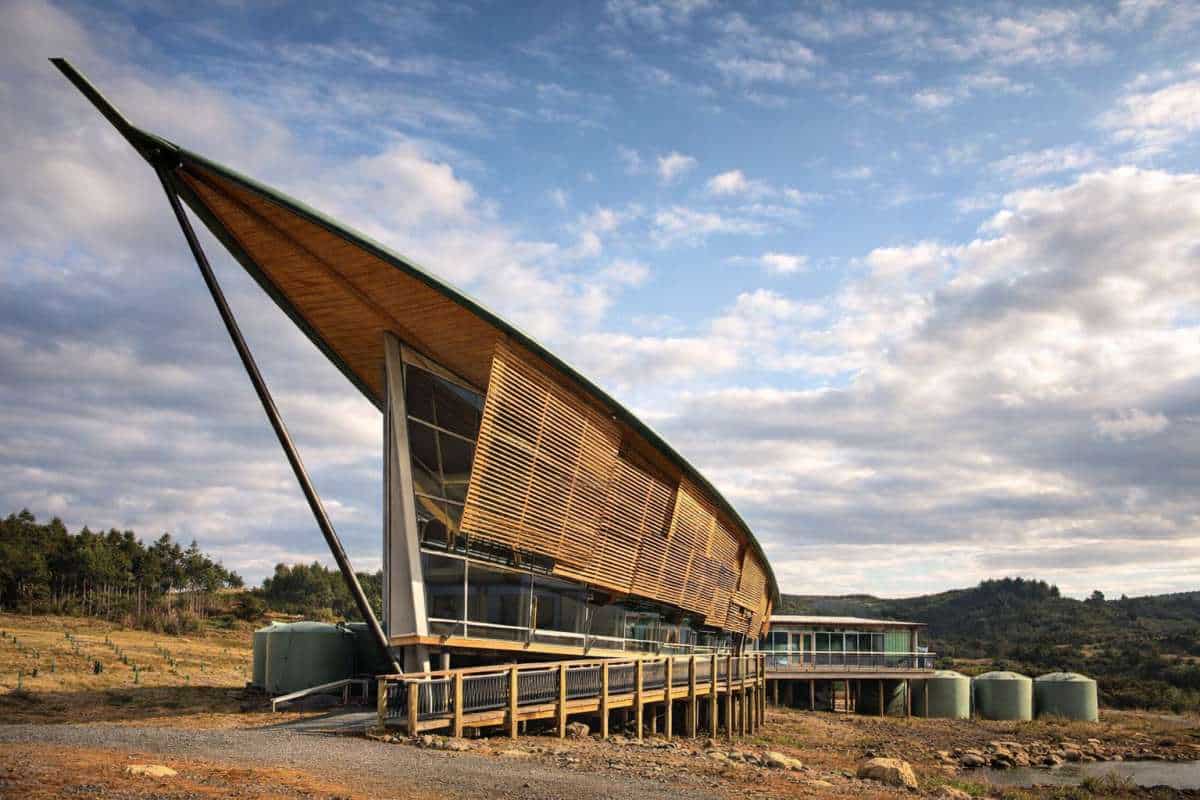
There is a brown sign at the Waitati turnoff that a lot of us have been reading at open-road speed for the better part of twenty years without ever indicating. Behind it sits 307 hectares of forest, nine kilometres of very deliberate fence, and the closest any of us will get to hearing what this coast sounded like before people arrived. It is half an hour from the Octagon, and most Dunedinites have still never been in.
The Turnoff You Have Always Driven Past
Twenty Minutes North and a Different Century
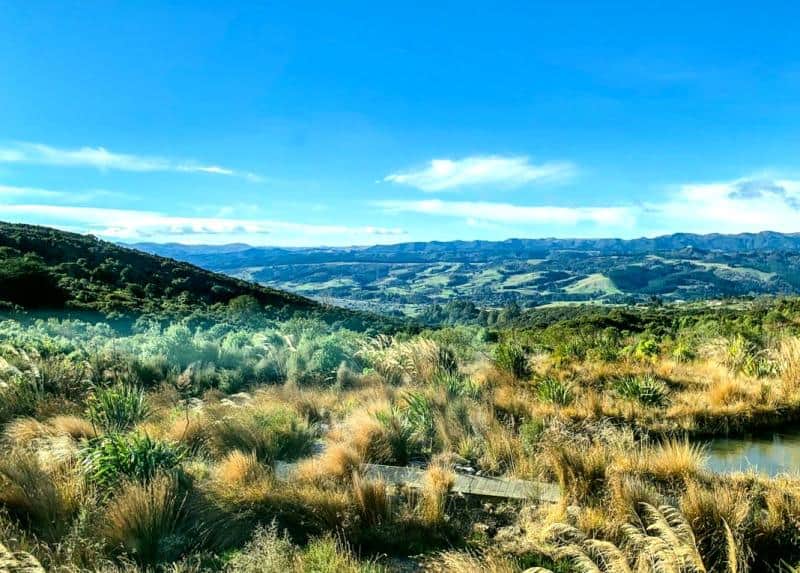
The turnoff is at Waitati, about twenty kilometres north of the Octagon, and from there it is Blueskin Road climbing out of the bay until the paddocks give up and the bush takes over. Number 600. Half an hour on the motorway, or the long way over Mount Cargill if you want the harbour laid out underneath you first.
That is the whole trip. It is closer than Karitane, and yet plenty of us have never once indicated. The sign has become scenery.
What is up there is a north-facing valley of regenerating forest between Waitati and Purakaunui, 307 hectares of it, wrapped in nine kilometres of fence. The proper name is Te Korowai o Mihiwaka. Most of us just say Orokonui.
A Fertiliser Factory and a Giant Aviary
It started as a much stranger idea than the one that exists now. In 1982 the cartoonist Burton Silver and a few friends began kicking around a sanctuary near Dunedin, and by the following July the proposal was to convert a city fertiliser factory into an enormous aviary. That went nowhere. What survived it was the Otago Natural History Trust, set up in August 1983, which then spent more than a decade going quietly cold.
Karori woke it up. When Wellington’s fenced sanctuary opened in 1995 and demonstrably worked, a remaining trust member, Ralph Allen, dug the Orokonui proposal back out. Kati Huirapa ki Puketeraki came in behind it. Two decades after a cartoonist’s odd notion about a fertiliser works, there was a plan with a valley attached.
How 307 Hectares Got Assembled
The land came together in pieces, which is why the boundary has that slightly improvised look on the map. The core was the Orokonui Conservation Area, 230 hectares the Department of Conservation agreed the trust could use, with the Minister of Conservation out walking the site in April 2006. The trust then bought another 67 hectares alongside it.
The last piece was a gift. A neighbouring landowner donated 57 hectares, which enlarged the whole project by about a fifth and added two kilometres to a fence already designed at 7.2 kilometres. A good chunk of it was pine plantation, which sounds like a liability until you know that felled pine rots down into huhu grubs, and huhu grubs are what kaka eat. Nobody turned it down.
The Fence Is the Whole Story
Nine Kilometres of Very Specific Engineering
Everything at Orokonui rests on a fence, and the fence is a genuinely interesting piece of engineering rather than a long run of netting. It stands 1.9 metres, it is built of stainless steel mesh, and the published specification is written against a list of animals: cats, possums, rats, stoats, ferrets and mice. Mice are the hard one. A fence that stops a stoat will not necessarily stop a mouse, so the mesh is sized for the smaller problem.
At ground level the mesh folds outward into a skirt, so anything that digs hits more fence instead of soil. At the top a curved steel hood beats the climbers: a possum can work up the face all day, then find itself upside down under a lip with nothing to hold. Construction started in December 2006 and the earthworks alone ran through to May 2007.
Watergates, Airlocks and the Bits That Fail First
A fence is only as good as its holes, and a fence strung across a valley has two kinds. Streams have to get out, so the water crossings are screened culverts that everyone calls watergates. People have to get in, so the entrances are airlocks: two doors, never open at once, and the reason you get asked to check your bag for a stowaway.
Both are where the trouble arrives. In one recent storm the sanctuary took more than 200 millimetres of rain across four days, and the culverts that normally pass a stream through politely became the only thing standing between a flooded catchment and the rest of the valley. Repairing that is not optional maintenance. A fence with a washed-out watergate is a fence with a door in it.
Sponsor a Fencepost
Nine kilometres of stainless steel is not cheap, and the money came in from a lot of small places. The public appeal opened in November 2005. One campaign asked people to hand over their five-cent pieces before the coin was withdrawn; another, run with the Otago Daily Times, let you sponsor a fencepost with your name on it. The Otago Regional Council put in serious money, as did a local gaming trust.
That is why the place feels communally owned in a way a Crown reserve never quite does. A lot of Dunedin households have a post in that fence somewhere. When it was finally closed on 3 July 2007, the Waitati Militia turned out for the occasion, which tells you roughly what sort of project this was and still is.
What Came Out, and What Came Back
The Winter of the Possums and the Poison
Closing the fence was the easy half. Everything inside it was still in there, and in August 2007 the work of removing it began: ground teams shooting goats and, by the end, some 800 possums. What the shooting could not reach was dealt with by bait containing brodifacoum, spread from the air across the fenced area.
There is no version of that which is pleasant, and nobody at Orokonui has pretended otherwise. It is also the only method that works at this scale, and the payoff turns up on the forest floor within a few seasons. Seedlings that used to be browsed to nothing get away, flowering and fruiting pick up, then the insects, then everything that eats insects. The birds get the headlines, but the first thing to recover here was the plants.
Kaka First, Then Everything Else
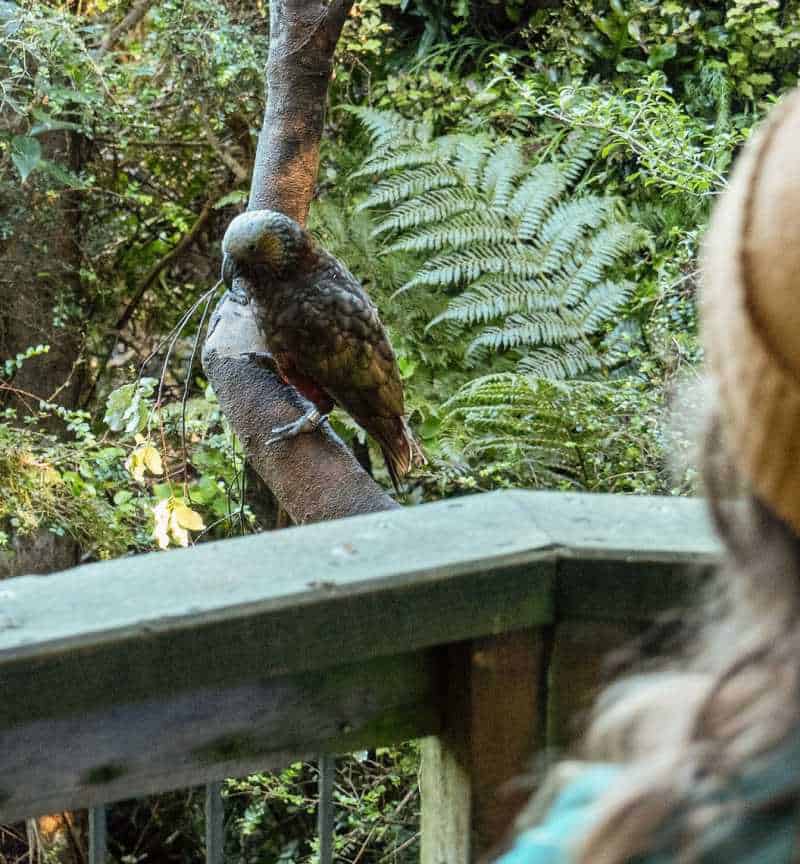
The first residents arrived almost immediately: four South Island kaka in July 2007, held in an aviary while they worked out that the valley was theirs. Tuatara followed in March 2009, fifteen of them, relocated from the University of Otago. Since then the list has grown into something that reads like a national roll call – takahe, Haast tokoeka kiwi, jewelled geckos, Otago skinks, South Island robin, saddleback.
Two species did not wait to be invited. Pukeko and paradise duck simply turned up once the habitat improved and the predators were gone, which is the outcome everyone involved is quietly hoping for more of. Behind all of it sits a lot of unglamorous work: native seedlings raised at a nearby nursery, and rocks stacked into piles because a lizard needs somewhere to be a lizard.
You Can Hear It From the Car Park
The reason to go is not the species list. It is the noise. Step through the airlock and the volume is simply wrong for a New Zealand forest – tui and korimako carrying on at each other, kaka somewhere overhead making the sound of a rusty gate. This is more or less what the whole Dunedin basin sounded like before we got here, and standing in it for an afternoon rearranges your sense of what normal is.
It does not stay behind the fence, either. Kaka were the first birds released and they have been colonising the city ever since, with reports of them in backyards and parks around Dunedin climbing year on year. If you have had a large green parrot yelling in your kowhai in Maori Hill or Opoho, that is the fence at Waitati doing its job at twenty kilometres’ range.
The People Who Keep It Empty
The Trap Lines Outside the Fence
The 307 hectares is the visible part. The less visible part is the country around it, because a sanctuary with a hard boundary still leaks. Birds fly out to feed and breed, and stoats and rats keep turning up at the fence line from the surrounding valleys. Which is where the volunteers come in.
Trapping in the halo around Orokonui is largely done by people nobody pays: households along Blueskin Road with a trap in the gully behind the shed, groups who take a line each and walk it on a rotation, schools that adopt a stretch. It is not romantic work. It is rebaiting in the rain, writing numbers in a damp notebook, and driving out again a fortnight later. But the reason a kaka can nest in Opoho at all is that a lot of people between here and there are quietly getting on with it.
What an Incursion Looks Like
Inside the fence the standard is absolute in a way that takes some getting used to. One mouse is an incident. One stoat is an emergency. There is no acceptable level, because a single pregnant rat can undo a decade in a couple of breeding seasons, and the smallest things in there – the geckos, the skinks, anything nesting on the ground – have no margin at all.
So the valley is permanently watched: tracking tunnels, chew cards, a detector dog when something turns up on a camera. The work is never finished and it never will be. That is the honest deal with a fenced sanctuary. You do not restore a place once and walk away. You hold it, indefinitely, and you keep paying for the fence.
Actually Going
Which Track to Pick
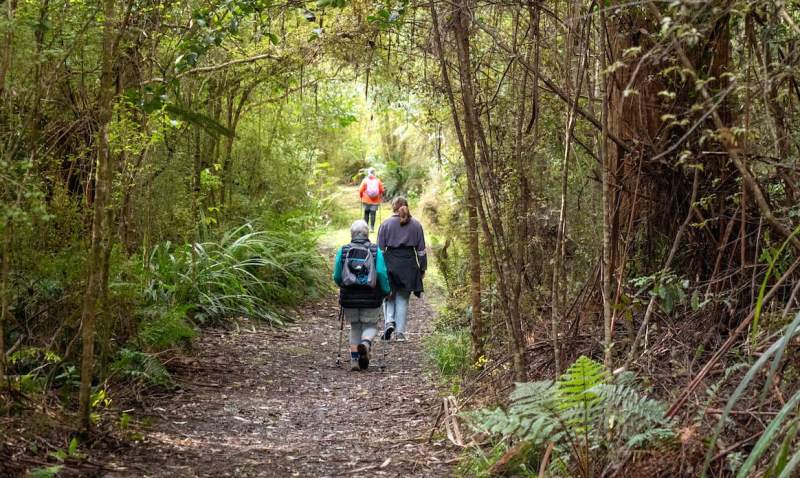
There is more walking here than most people expect. The marked tracks run from twenty minutes to the better part of a day, so work out before you arrive how much time you actually have. The short loops near the visitor centre give the highest hit rate for wildlife – the tuatarium, the lizard enclosure, the pond where the takahe conduct their arguments in full view.
For forest rather than exhibits, the Fernbird Track and the Kaka Track drop into the bush, past feeding stations where you can sit and watch tui bully everything else off the platform. The long option runs down to the valley floor, where New Zealand’s tallest known tree stands, and it is a genuine climb on the way back. Wear proper shoes. People turn up in sneakers and quietly rule out half the map.
Hours, Cost and the Cafe
The practical bit. Orokonui opens Thursday to Monday, 9:30am to 4:30pm, with last entry at 3:30pm, and it is shut Tuesday and Wednesday – which catches out more locals than you would think, because a still, clear Wednesday is exactly the day you would decide to go. The Horopito cafe runs 10am to 3pm. Public holidays carry a surcharge, so the current opening times are worth a glance before you drive out.
Entry is $26 for an adult and $13 for children 16 and under, with family, student and senior rates and an annual pass for anyone making a habit of it. The visitor centre, finished in 2010, sits high on the slope with the valley falling away below it, and is worth ten minutes on its own.
What stays with you afterwards is not a particular bird. It is the realisation, somewhere on the climb back up, that the noise you have just spent an afternoon inside used to be the ordinary background of the whole district – and that it exists now because a few thousand people bought fenceposts, walked trap lines and held a boundary nine kilometres long. Orokonui is not a restored place. It is a place being held, which is a harder and less finished thing.