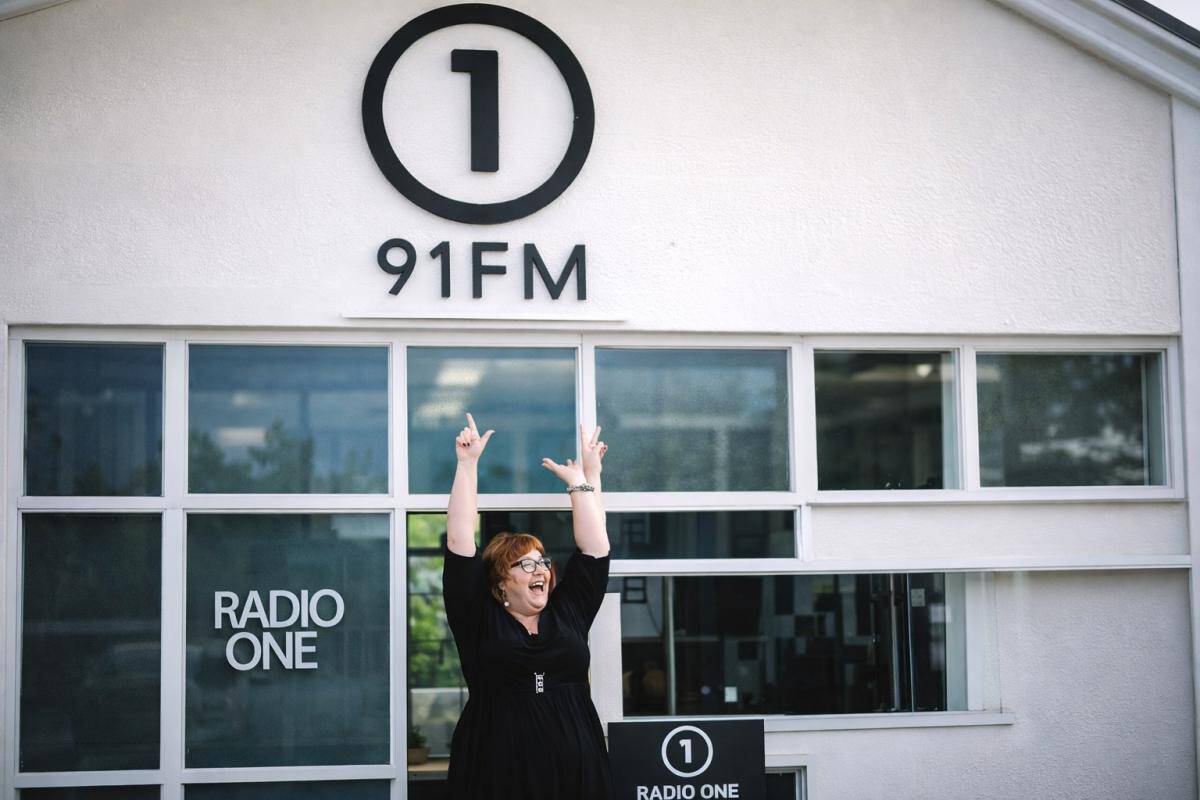
Most Otago students never tune in, and most Dunedin locals assume it is not aimed at them. The second assumption is the more wrong of the two – 91.0 has come off Mount Cargill since 1987 and reaches from Oamaru to past Balclutha. Radio One has been broadcasting out of the university since 1984, on very little money, with a roster that is mostly volunteers. Here is what is actually going on behind the desk.
A Boardroom, a Grant and a 100 Watt Transmitter
The Letter That Started It
Radio One began with a letter. Alastair Thomson, who had worked on the student station at Waikato, wrote to the OUSA president of the day, Phyllis Comerford, arguing that Otago ought to have one of its own. The letter did what good letters do – it found the right people. Members of Netherworld Dancing Toys and The Verlaines got involved, Graham Cockroft took the station manager job, and OUSA put up a grant of roughly $12,000.
It went to air in early 1984 out of OUSA’s former boardroom, under the call sign 4SAO. A boardroom. Worth sitting with for a second, because the tidy version of this story would have it starting in a purpose-built studio with a proper desk and a sign on the door.
From Part-Time to Round the Clock
For the first couple of years it ran the way you would expect a student project to run: part-time, during the university year, quiet over summer. That changed in 1986, when station manager Chris Lambourne pushed it to broadcast round the clock, all year, which is a much harder thing to staff than it sounds.
In 1987 it moved into a new annex on the Student Union building, put up specifically to house the station, OUSA’s offices and Critic Te Arohi. Sharing a wall with the student paper has shaped both of them ever since – they still share a designer and a video editor between them.
Why It Reaches Oamaru
Here is the bit most people get wrong. Radio One is not a campus signal you lose somewhere around the Botanic Garden. In the early years the transmitter was a 100 watt unit on the roof of the Richardson Building, then called the Hocken – the eleven-storey one, because of course it was.
Since 1987 it has broadcast from the top of Mount Cargill, twelve kilometres north of campus. From up there the signal covers most of coastal Otago, from Oamaru down to past Balclutha. If you have ever driven out to Moeraki with the radio scanning, you were in range of 91.0 the whole way. It streams as well now, so the geography matters less than it did, but the point stands: this was never only a student thing.
Tuesday Afternoon at 640 Cumberland Street
Who Is Actually in the Building
The studio sits at 640 Cumberland Street, and the office keeps ordinary hours – nine to half four, Monday to Friday – which is the first clue that this is a workplace rather than a common room with a microphone in it.
The paid team is small. Kristina Simons runs the station. Maddy Barnes is music director and does a good share of the interviewing. Effie Jaxx handles the programme and the volunteers, which turn out to be the same job. Jon Bakos keeps the technical side upright, Adz Dunn produces, and Lily Knowles does breakfast and promotions.
Two more are listed alongside the humans as Chief Morale Officer and Chief Zoomies Officer, which tells you most of what you need to know about the office.
How a Show Gets Made
Everyone else is a volunteer, and the way in is genuinely open: you download a form. The station takes DJs, news presenters, music journalists and editors, and it trains them, which is the part that matters. Nobody arrives knowing how to talk to a microphone for three hours.
A show starts as a pitch and a slot. You get taught the desk, you get mentored through the first few, and then it is yours – you pick the music, you chase the interviews, you fill the gaps yourself. Have a look at this week’s programme grid and you can see the shape of it: a drive slot from four to seven, then something considerably stranger after.
The Top 11 and the Paper Trail
The other thing a volunteer show produces is a paper trail. Interviews go out as podcasts afterwards – Reb Fountain on a new album, a local single getting its first proper airing, a film festival director talking about a screening – so an hour of work does not just evaporate at seven o’clock.
Then there is the Top 11, the weekly countdown, which is voted on by listeners rather than assembled by a programmer. Dunedin acts get tagged (Dn) in the listing and there are usually several of them sitting near the top, which is the sort of thing you cannot fake into existence. If you would rather have it delivered, ONEMAIL is the weekly digest – music, gigs, giveaways, the noticeboard.
What Commercial Radio Cannot Do
Shows With No Format Clock
Commercial radio runs on a format clock. Songs from a tested rotation, at set intervals, aimed at a demographic that has already been described to an advertiser. It works, and it is the reason you can drive from Dunedin to Christchurch and hear the same eleven songs twice.
Radio One carries no such obligation, and the programme grid shows it. A show can sit in the seven-to-nine slot on a Tuesday under a name like Action Paddle / Actual Paddock and nobody is required to explain themselves. A specialist show here can be two hours of one genre, or one country, or one decade, playing to a few hundred people who care enormously. That is not a business model. It is the entire point of the thing.
The Names That Came Through
Four decades of this produces alumni. Shayne Carter came through, so did Jan Hellriegel, Lesley Paris and David Pine – which is to say a fair slice of the music that made Dunedin’s name in the eighties and nineties had a hand on this desk at some stage. Wallace Chapman, Charlotte Glennie and Sam Hayes went the broadcasting route instead.
Aaron Hawkins is on the same list and still turns up in the podcast feed doing interviews, which tells you something about how people leave this station: not entirely, and not for good. Radio One is part of the Student Radio Network, so the same pattern runs in Auckland, Wellington and Christchurch. Dunedin’s version simply has a longer list of bands attached to it.
The Onecard, and How It Ended
The loyalty card deserves its own paragraph. Launched in 1986 as the Rad-One Card and later shortened to the Onecard, it gave subscribers discounts at local shops and entry to on-air competitions for a small annual fee. It worked well enough that student stations around the country copied the idea outright.
It is gone now. OUSA moved it online in 2025 and rebranded it the Green Card, partly because physical cards cost money and partly because fewer vendors wanted a bar of the discount scheme. The new version did not take, and the call was made this year to stop it in any format. Forty years is a long run for a discount card, and there is no need to dress the ending up as anything other than an ending.
Gigs, and the All-Ages Problem
The station’s other job happens off the air entirely. Radio One hosts and supports gigs around Dunedin, and the ones worth noticing are the all-ages shows and the local high school band nights – the gigs that are awkward to run, make no money, and are the only realistic way a sixteen-year-old with a guitar gets a stage in this city.
There is a Market Day, an Album of the Week, a Golden Ticket, the occasional weekend away to be won. Small stuff, most of it. But the small stuff is what turns a frequency into a room, and a room is the thing a fifteen-year-old band actually needs.
Radio One works because nobody has ever quite managed to make it efficient. A station with a small paid team, a large volunteer roster and no format clock will always be slightly shambolic, and the shambolic part is where the good material lives. Four decades on, someone is still walking into 640 Cumberland Street for the first time to learn how to talk to a microphone. That is the whole institution, really – a room, a desk, and somebody who has not done this before.